World STEM League

Applied STEM, taught through competitions

Partnered with undergrad-led orgs at Harvard, Yale, Stanford, Caltech, and more.

2600+ schools
50+ countries
15 competitions
Monthly mentor sessions
Finals judged by university professors & industry experts
Harvard Undergraduate Research Journal UCI EWB UNC EWB Yale EWB Rutgers EWB Boston EWB Stanford EWB Rice University EWB Wash U EWB Caltech EWB UIUC EWB

Hear From Our Students

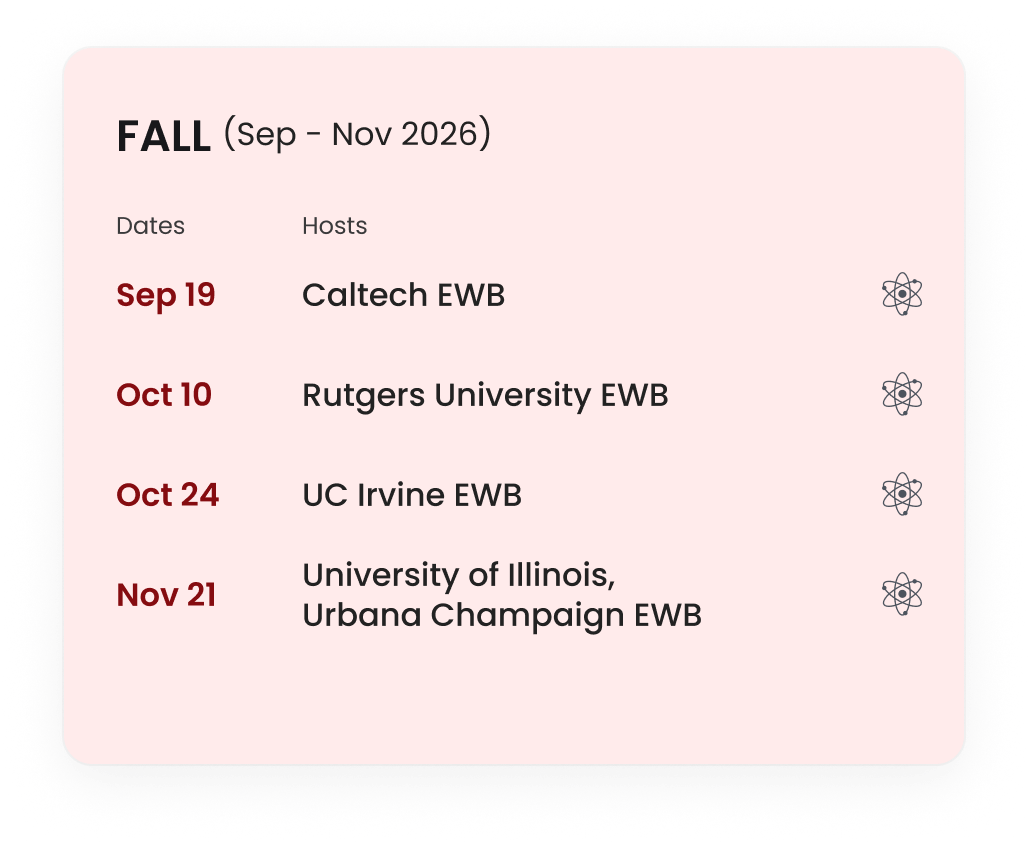
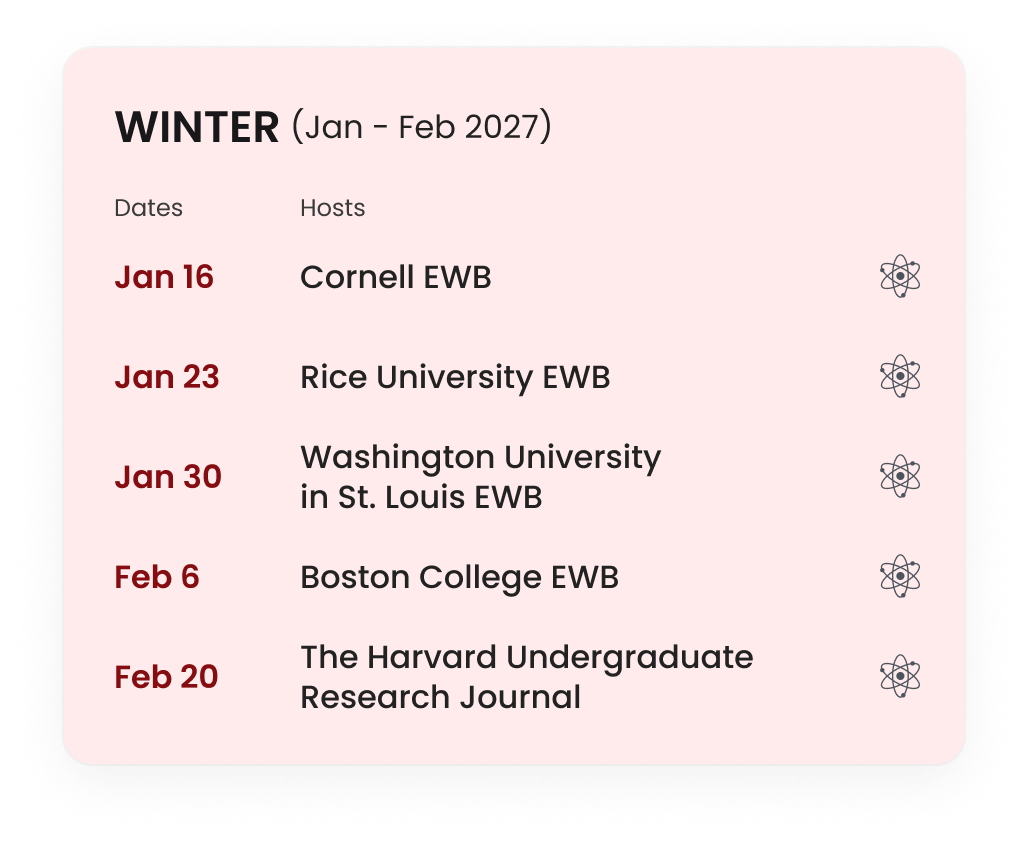
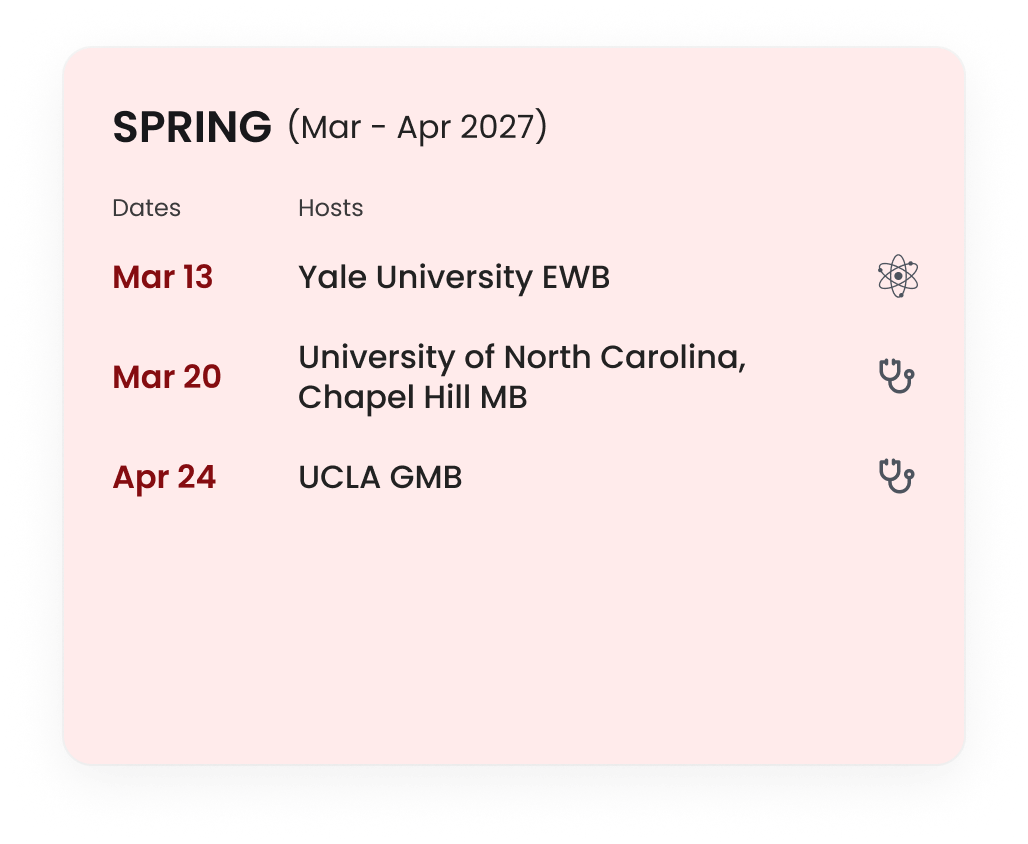
World STEM League Preliminary Round Schedule

Science & Engineering Competition
Science & Medicine Competition
Partner schools can request alternate test dates for in-school programs. Contact us to arrange.

The League Learning Cycle

Most competitions happen once. Students prepare, compete, and the experience ends. The World STEM League is different.

Students compete throughout the school year, learning and improving after every competition.
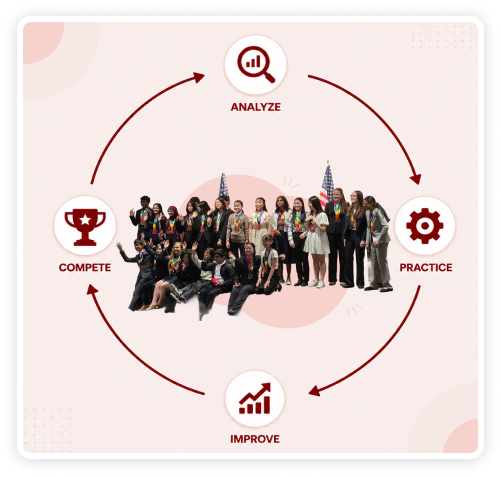
Compete
Global STEM competitions.
Analyze
Detailed feedback report.
Practice
Personalized practice resources.
Improve
Refine before the next round.

Why this matters more than ever?

Students don’t need more activities.
They need the right kind of challenge.

1. School builds strong foundations

Schools develop core knowledge, academic thinking, and discipline.

2. Students grow by applying it

Real growth happens when students apply what they learn in new situations.

3. The future belongs to doers

Those who solve real-world problems, work in teams, and keep improving.

That’s what the World STEM League is designed for
We combine competition and mentorship to help students grow as problem-solvers and build meaningful achievements for their future.

Multiple Pathways To Recognition

Success in the World STEM League isn’t defined by a single result. Students can be recognized in several ways throughout the League Year, rewarding performance, improvement, and persistence.
Mini-League Progression
Move up through performance tiers as you improve. Students compete in 20-person groups with peers of similar ability, and top performers get promoted to higher tiers.
Recognizes progress , improvement , and grit.
Global League Rankings
Climb the global leaderboard. Students accumulate points across the year — the highest-ranked appear on AlgoEd's public league table.
Recognizes year-long excellence , consistent participation , & sustained improvement.
Innovation Challenge
Submit your applied STEM project for end-of-year recognition. Teams refine their year-long work into a final solution.
Recognizes creativity and real-world problem-solving.
Plus, every competition recognizes top performers — open to all participants, league or not.

Applied STEM Project

Iterate on a shared real-world STEM
problem set
every year

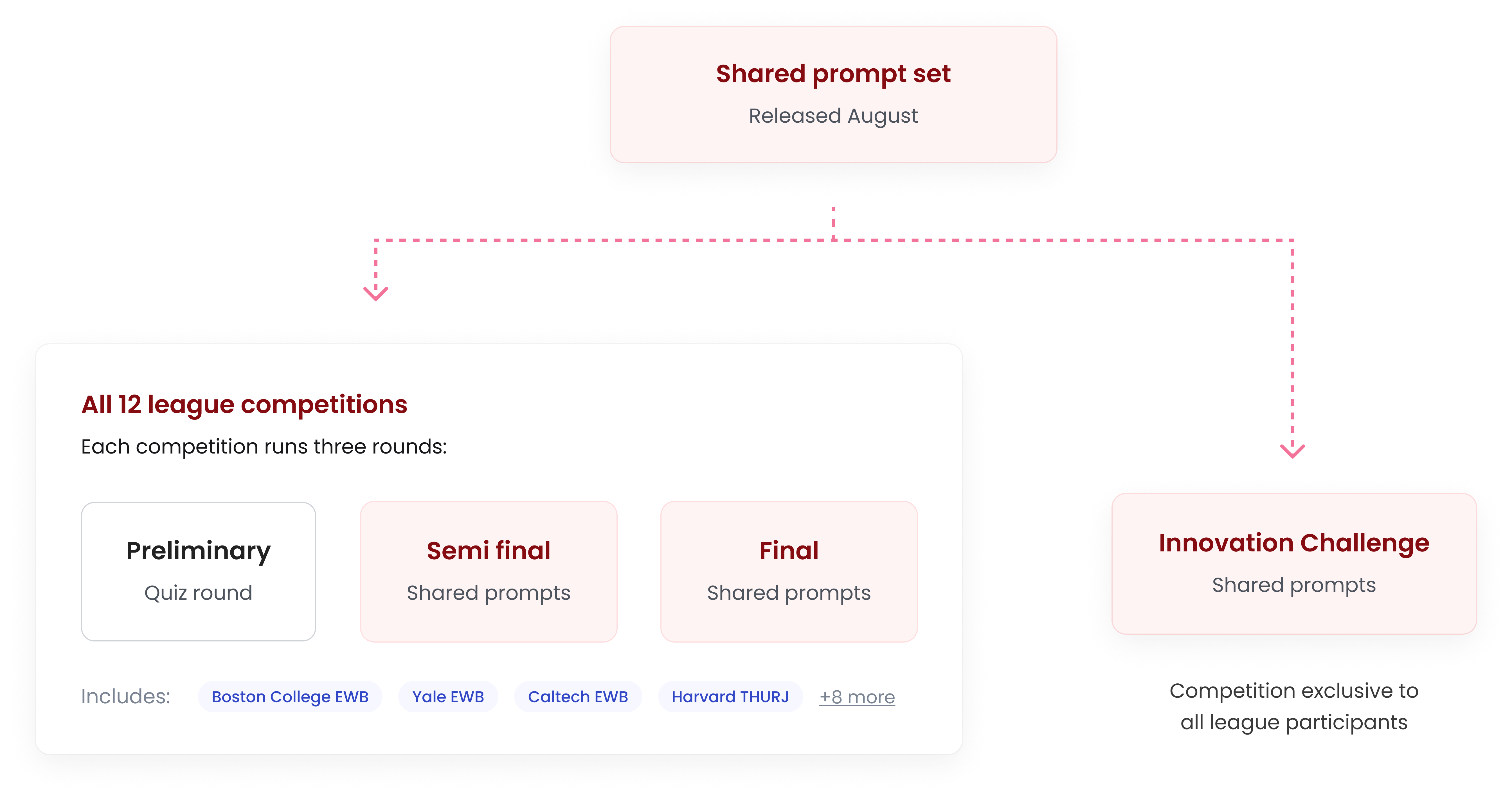
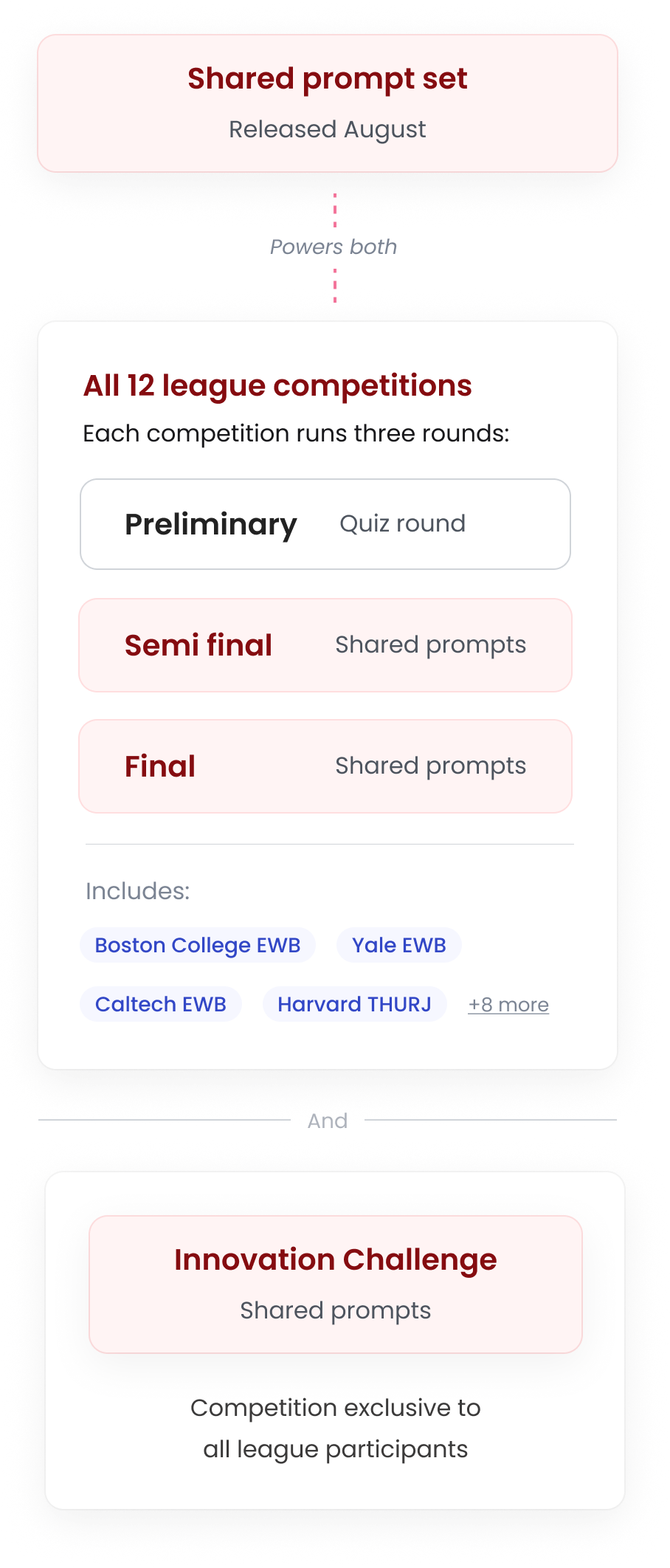
One prompt set runs through the semifinals and finals of all 15 competitions, plus the year-end Innovation Challenge. Students can choose to build and improve a single project — they don't need to start over each round.
Past competition prompts (official prompt set will be released in August)
MIT EWB
Engineering STEM Project
Full Prompt

Choose one of the prompts below. Using your science and engineering knowledge, researching the given community, and trying to understand the complexities involved with the problem, propose a sustainable solution that a group like Engineers Without Borders could implement in that community and explain how you would do so. You may be as creative as you like with your presentation, but you should assume that your audience has no prior knowledge of this problem and make sure to integrate considerations of cultural, economic, and technological feasibility into your presentation.

1. Waste Management in India

In rapidly growing urban areas in India, informal settlements often lack organized waste collection systems. Trash accumulates in streets and waterways, increasing the spread of disease and worsening flooding during monsoon seasons. Many residents rely on informal recycling work for income, but unsafe working conditions and inefficient sorting methods create health risks. Come up with an effective and sustainable plan to manage the accumulating waste without negatively impacting those who rely on the informal recycling economy for their livelihoods.

Source: https://thecsruniverse.com/articles/waste-warriors-revolutionising-india-s-urban-slums

2. Post-Harvest Maize Loss in Rural Guatemala

Many smallholder farmers in the Huehuetenango region of Guatemala rely on subsistence-oriented maize farming, drying maize in the sun, and storing it either on cobs or as shelled kernels in bags or tapanco structures. However, these traditional post-harvest practices can lead to significant grain losses due to mishandling of moisture, insect infestations, and fungal contamination. Farmers often apply pest control reactively rather than preventively, and storage conditions vary widely between households. These losses threaten food security and economic stability in rural communities. Come up with an affordable method for these farmers to effectively dry their maize that reduces grain losses, accounting for climate and storage conditions.

Source: https://www.sciencedirect.com/science/article/abs/pii/S0022474X16302144

3. Indonesia's Flooding and Waste Water Management Dilemma

Indonesia faces annual flooding risks in its capital, Jakarta. The country also faces concerns of excessive wastewater accumulation. To combat the flooding concerns, the National Capital Integrated Coastal Development proposed a plan to develop a Giant Seawall, which will significantly modify the existing transportation infrastructure. At the same time, the wastewater mismanagement has significantly deteriorated the water quality in the shores of Jakarta Bay and in the capital's region. In the current form of the Giant Seawall plan, the complexity of the plan will divert funds and focus away from the water and sanitation concerns. Propose a new plan that will combat climate-related flooding concerns while still appropriately addressing the problem of wastewater mismanagement and its impact on the community and environment.

Source: https://www.sciencedirect.com/science/article/pii/S0025326X16303496

4. Phosphate Pollutants in Tunisia

Phosphate is one of Tunisia's prized natural resources and it is the world's tenth largest exporter of phosphate fertilizers. Unfortunately, this type of fertilizer can lead to the accumulation of toxic metals in the environment. In Gafsa, phosphate is being mined at a rate that is polluting the city's gulf. There has also been a correlation to increased cases of bronchitis and asthma in nearby cities. In fact, the concentration of toxic substances near the phosphate plants exceeds international standards. Propose a plan to mitigate the environmental effects of phosphate pollution, or a method of phosphate mining that could reduce these negative impacts, keeping in mind the international demand for phosphate fertilizer.

Source: https://untoldmag.org/gabes-tunisia-polution-protest/

UCLA GMB
Medical STEM Project
Full Prompt

1. Antibiotic Misuse and Resistance

Antibiotics save millions of lives each year, but they are often used incorrectly. In many places, people stop taking antibiotics too early, use leftover medication, or take antibiotics for illnesses like colds that they cannot treat. This allows bacteria to become resistant, making infections harder to cure.

Your task: Design a healthcare-based solution that helps reduce antibiotic misuse in a specific community. Your idea must involve medical tools, treatment strategies, or healthcare worker action. (Not merely building hospitals or creating social media campaigns)

In your presentation, include:

  • Why antibiotic resistance is happening in the community you chose
  • A healthcare-centered solution (such as improved prescription systems, patient education methods used in clinics, or diagnostic tools)
  • How doctors, nurses, or pharmacists would use your solution
  • How your solution helps prevent resistant infections and protect patients

2. Late Diagnosis of Chronic Diseases

Many serious diseases such as diabetes, hypertension, or cervical cancer, are often diagnosed too late. Late diagnosis can lead to complications that could have been prevented with earlier screening and treatment.

This problem is especially common in underserved populations due to barriers like limited screening access, lack of symptoms early on, or reduced interaction with healthcare providers.

Your task: Choose a chronic disease and design a medically focused intervention that improves early detection in a specific population. Your solution must involve a clinical screening strategy, diagnostic improvement, or provider-led prevention approach. (Not just an awareness campaign or application that is made up)

In your presentation, include:

  • Why the disease is often diagnosed late in the population you selected
  • A healthcare-based early detection strategy (e.g., mobile screening workflows, clinic-based risk scoring systems, community health worker testing programs)
  • How your solution would be implemented in real healthcare settings
  • How earlier diagnosis improves long-term health outcomes

WHY STUDENTS JOIN

The World STEM League combines competition and mentorship to help students grow as problem-solvers while building meaningful achievements for their academic profiles.
Mentorship
Teams are paired with mentors from partner university organizations.

Mentors help teams:

  • Understand the scientific and technical aspects of the challenge
  • Refine their problem-solving approach
  • Improve how they present their ideas

This mentorship gives students insight into how real scientists, engineers, & technologists think & collaborate.

See More
Solve Real-World Problems
Students build science, engineering, and medical solutions to real-world challenges, refining their work across the year.

Supported by mentors, students refine their ideas, learn from peers, and improve throughout the year. The journey culminates in the Innovation Challenge, where teams present their solutions and receive expert feedback.

  • Turn ideas into real-world impact
  • Continuously improve with guidance and feedback
See More
Feedback Reports
After every round, students receive a detailed performance report — strengths, weaknesses, and where to focus next.

Each report breaks down concept strengths, areas for improvement, speed-vs-accuracy analysis, and question difficulty. The reports are designed to be informative, encouraging, and low-pressure — helping students grow with confidence rather than feel discouraged.

    Students receive

    • Engaging performance report
    • Clear insights into strengths & areas to improve
    See More
    Continuous Improvement
    Students compete repeatedly across the year, refining their approach between rounds instead of starting over.

    Across multiple league competitions, students:

    • Practice repeatedly
    • Track their improvement over time
    • Collaborate with teammates across competitions

    This creates a cycle of growth

    Compete → Learn → Refine → Improve

    See More
    Profile Building
    Students accumulate meaningful achievements across the League Year.

    These include:

    • Merit & Honor Awards
    • Semi-Finalist & Finalist Recognitions
    • Mini-League Rankings & Promotions
    • Global League Rankings

    These achievements can be included in:

    • School Applications
    • Scholarship Applications
    • Student Portfolios
    See More
    Exposure to University
    Each competition opens with a live session hosted by undergrads from partner university orgs — a window into how university STEM communities actually work.

    During these sessions, students interact directly with mentors from partner organizations and get an inside look at how undergraduate research teams approach problems. For middle and high schoolers, it's a rare early exposure to the culture of university research and innovation.

    This gives students a rare opportunity to experience the culture of university research and innovation.

    See More

    World STEM League

    Year-Long rigorous STEM training & competition
    Single Competition
    Experience a single competition.
    US$35
    EARLY
    $45 REGULAR
    $55 LATE
    TRY NOW
    Explorer Pass
    (3-months)
    Access all competitions & League features in the next 3 months.
    US$49/month
    Charged at
    US$149 every 3 months
    The first competition starts on Sep 19, 2026. Your league subscription won't start till then.
    JOIN LEAGUE
    League Year Pass
    Best Value
    Access all competitions all year long.
    US$29/month
    Charged at
    US$349 every year
    The first competition starts on Sep 19, 2026. Your league subscription won't start till then.
    JOIN LEAGUE

    More Access. More Growth. More Impact.

    See the difference each option makes in your STEM journey
    Features Single competition League
    Global Benchmarking
    Global Recognition (Ongoing)
    Ability-Based Mini League
    Mentorship Paired with top university student mentor
    Skill Development Limited Deepest
    National & Global League Ranking

    Single competition

    • Global Benchmarking
    • Global Recognition
    • Ability-Based Mini League
    • Mentorship
    • Skill Development Limited
    • National & Global League Ranking

    League

    • Global Benchmarking
    • Global Recognition (Ongoing)
    • Ability-Based Mini League
    • Mentorship Paired with top university student mentor
    • Skill Development Deepest
    • National & Global League Ranking
    Start Your League Journey
    Compete regularly. Improve continuously. Climb the rankings.
    Join thousands of students competing in The World STEM League.